
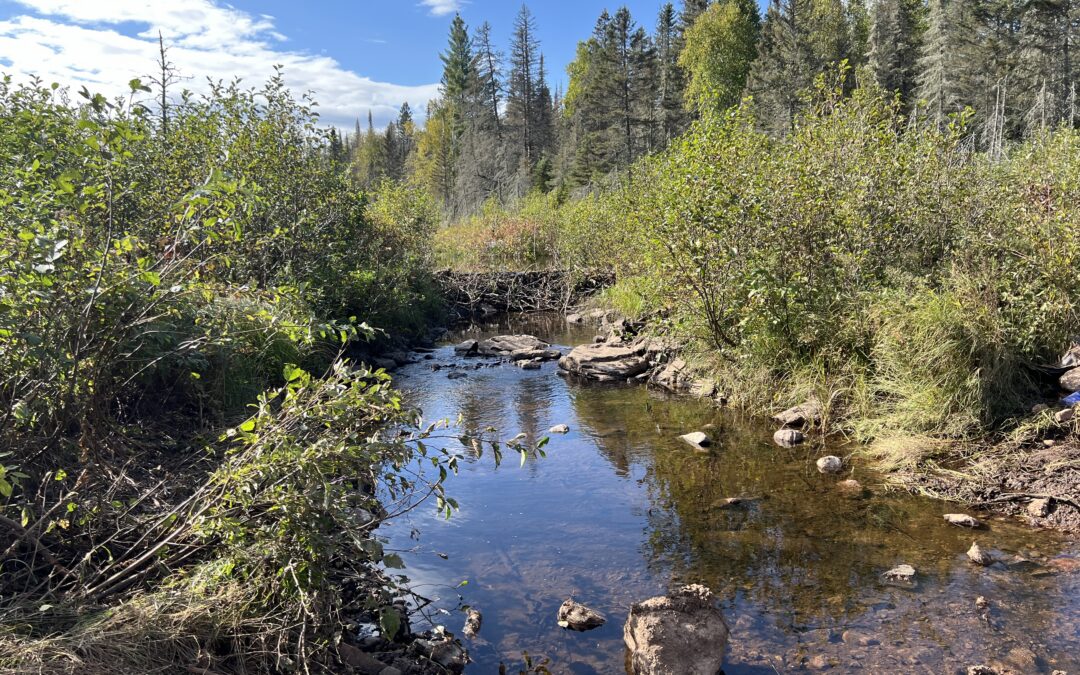
If you caught last month’s blog on the Stage Zero debate, you already know the conversation around process-based restoration is anything but settled. Practitioners are divided, the science is still catching up, and the question of which methodology is “right” depends heavily on who you ask and where you’re standing.
But there’s another layer to this conversation that doesn’t get enough attention: Even when restoration professionals agree on the right approach, the regulatory tools used to evaluate and credit that work may not be built to recognize it.
That gap between what’s ecologically sound and what the rulebook can actually measure is one of the most pressing challenges in stream mitigation today.
When the Rulebook Doesn’t Match the Field
The Stream Quantification Tool (SQT) serves as the primary methodology for crediting stream restoration work within the mitigation banking framework. It’s designed to evaluate ecological uplift through a structured scoring system. For conventional single-channel restoration projects, it does a reasonable job of capturing what’s been gained.
The problem is that the SQT was largely built around a specific vision of what a restored stream looks like. It’s a defined channel with measurable dimensions, a predictable planform, and a relatively stable configuration.
Stage Zero systems (and process-based restoration more broadly) don’t fit neatly into that vision. These approaches intentionally create broad, dynamic, multi-channel complexes where the “stream” is less a discrete feature and more a distributed process across a floodplain.
Also, the SQT has no reliable mechanism for quantifying the ecological value of that complexity. That means some of the most ecologically rich restoration outcomes being achieved in the field today are, from a regulatory credit standpoint, essentially invisible.
The Beaver Problem
Here’s a scenario that illustrates the problem well:
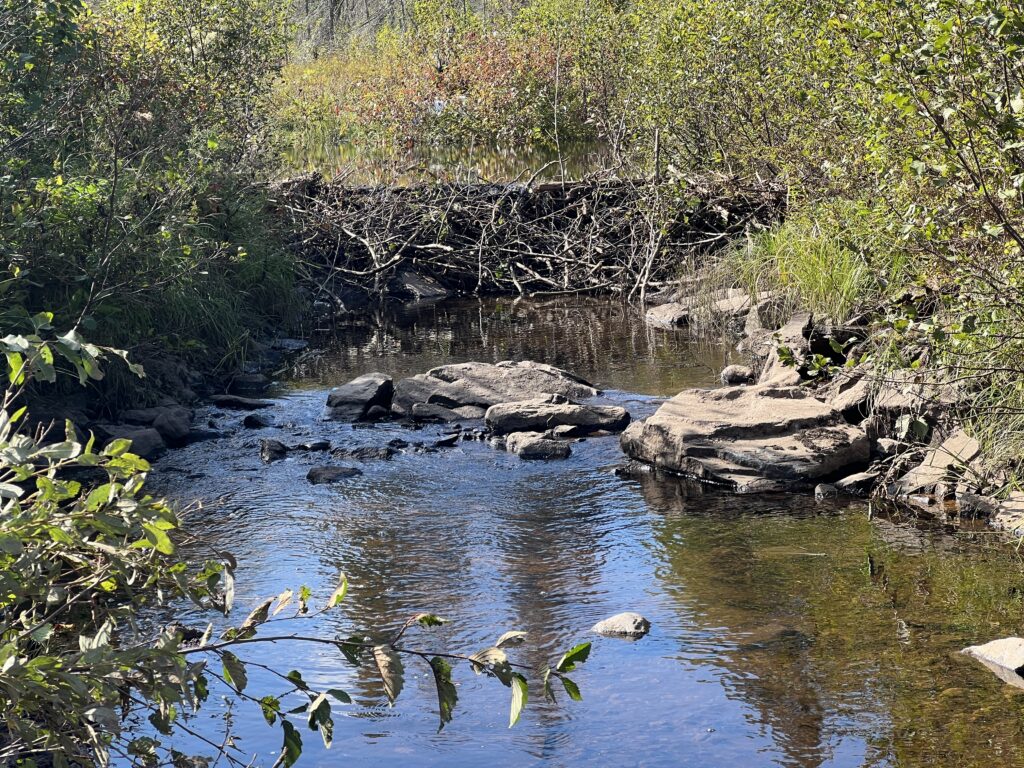
Let’s say a mitigation bank project is moving through the monitoring phase, and beavers naturally colonize the site. They begin building dams, backing up water, creating pond complexes, and fundamentally altering the area’s hydrology.
Ecologically speaking, this is often a sign that the system is functioning at a high level! Beaver activity is strongly associated with increased water retention, improved habitat heterogeneity, groundwater recharge, and biodiversity.
But under current Army Corps methodologies, there’s no clean answer to the question of whether this is beneficial or detrimental to the project’s credit standing. Especially if it starts to skew the Stream Quantification Tool values outside of the planned scores.
The regulatory SQT framework simply wasn’t designed to accommodate this kind of dynamic, natural intervention – even when that intervention is precisely what a healthy, self-sustaining system looks like. This is a practical example of how the rules can work against the very outcomes restoration is supposed to produce.
A Crack in the Door
That said, it’s not all friction. The SQT does show some flexibility here. It tends to lean toward classifying these kinds of multi-channel, wetland-complex systems as “beneficial” rather than penalizing them outright.
That’s a meaningful opening. It suggests there’s room within the existing framework to pursue process-based restoration approaches – including those that actively invite or accommodate natural dynamics like beaver colonization – without immediately running into a regulatory wall.
For restoration practitioners and mitigation bankers willing to engage carefully with the regulatory process, this nuance creates a narrow pathway for advancing approaches that single-channel methods alone cannot replicate.
The Proof Gap
The harder challenge is one of documentation. Restoration professionals working in this space intuitively understand that combining natural processes with intentional design should produce superior ecological outcomes.
The logic is sound: When you set the conditions for a system to function and then let it do so, you tend to get something more resilient and more ecologically authentic than a fully engineered solution.
But intuition doesn’t satisfy a regulatory framework that requires quantifiable proof, and the current tools aren’t calibrated to provide it for these systems.
This is where the field genuinely needs innovation, not just in restoration methodology, but in how outcomes are measured and credited.
Someone has to be willing to do the rigorous, long-term monitoring work that builds the evidence base. The data doesn’t exist yet because not enough people are collecting it!
The practitioners and mitigation bankers who invest in documenting process-based outcomes today will shape what regulatory assessment looks like in the next decade.
What Comes Next?
The disconnect between regulatory tools and ecological reality isn’t going away on its own. It will take technical creativity, a willingness to engage regulators in good-faith dialogue, and a serious commitment to monitoring and data collection to close the gap.
At Midwest Wetland Improvements, we’re paying close attention to how this space evolves, because the projects worth doing are often the ones that push the boundaries of what current frameworks are built to handle.
Working through a stream or wetland project where the path forward isn’t obvious? We’d love to take a look. Reach out, and let’s walk the site together.
Recent Comments