
For over a decade, two aging embankments reshaped a small headwater creek in Carlton County, Minnesota. Water backed up behind them, warming past the point where brook trout could survive. The fix had been on the table for years, waiting for the right partnership.
That moment came when Midwest Wetland Improvements partnered with Geomorphic Restoration, the Fond du Lac Band of Lake Superior Chippewa, and the Carlton County Soil and Water Conservation District (SWCD) to bring the Jolicouer Creek Restoration Project across the finish line.
This partnership resulted in roughly 2,000 linear feet of reconnected stream, restored cold-water habitat, and a healthier path forward for brook trout in a designated trout stream tributary.
A Decade-Long Vision, Finally Realized
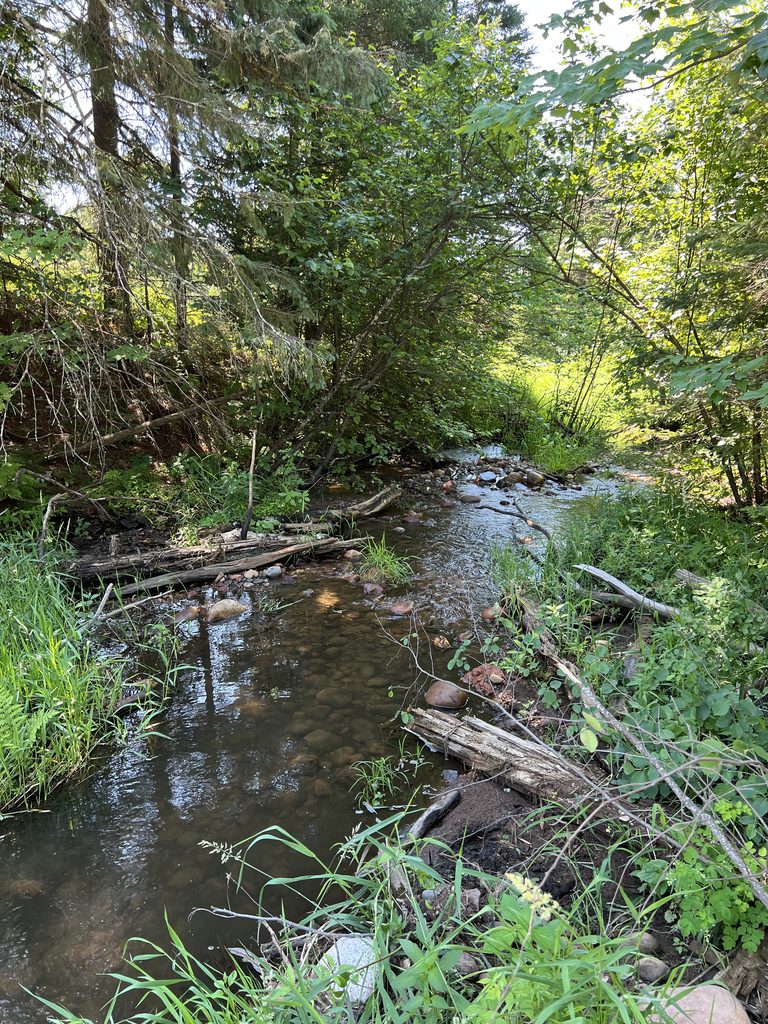
Jolicouer Creek sits in the headwaters of a tributary to Otter Creek, a designated trout stream. For a cold-water species, even a modest temperature shift can make a stretch of stream unlivable. Unfortunately, two impoundments along the creek backed up flow and created warm-water conditions well outside brook trout’s temperature tolerance.
Kelsy A. Federico, Watershed Specialist for the Fond du Lac Environmental Program, had been with the Fond du Lac Band of Lake Superior Chippewa since this project was just an idea: “This project had been in place for at least 10 years before I started, and it was a wonderful feeling to get this project across the finish line. In the grand scheme of things, it was a smaller project, but the impacts were significant.”
That impact extends well beyond stream temperature. Food sovereignty matters deeply to the Fond du Lac Band, and a healthy, self-sustaining brook trout population directly supports that goal. Restoring cold-water conditions in Jolicouer Creek meant restoring a food source the Band has relied on for generations.
Designing for Cold Water and Connectivity
The project’s goals were as layered as the creek itself. The team set out with five goals:
- Restore natural stream hydrology and channel stability
- Improve cold-water habitat for brook trout
- Reestablish upstream and downstream ecological connectivity
- Minimize sediment and thermal impacts during construction
- Make decisions informed by tribal priorities and geomorphic data along the way
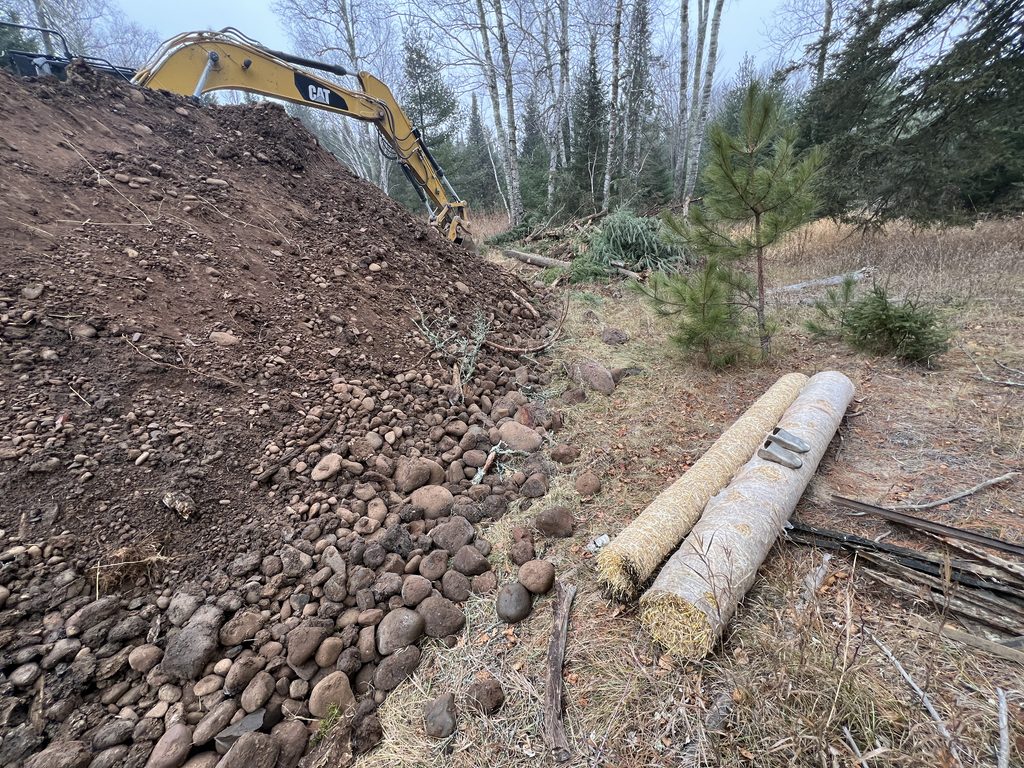
To meet these objectives, the team applied Natural Channel Design (NCD) principles grounded in detailed geomorphic assessment. Rather than removing both embankments at once, the project used an adaptive drawdown and phased embankment-removal strategy.
This approach reduced the amount of sediment mobilized at any one time. It also protected downstream thermal conditions throughout construction, which is a critical consideration for a stream already struggling with temperature stress.
Built to Adapt
Stream restoration rarely goes exactly as planned, and Jolicouer Creek was no exception. Throughout construction, the team made field-fit design adjustments based on real-time site conditions and monitoring data. Close coordination with tribal partners ensured that these on-the-ground decisions stayed aligned with the project’s broader goals, rather than drifting away from them under time or site pressure.
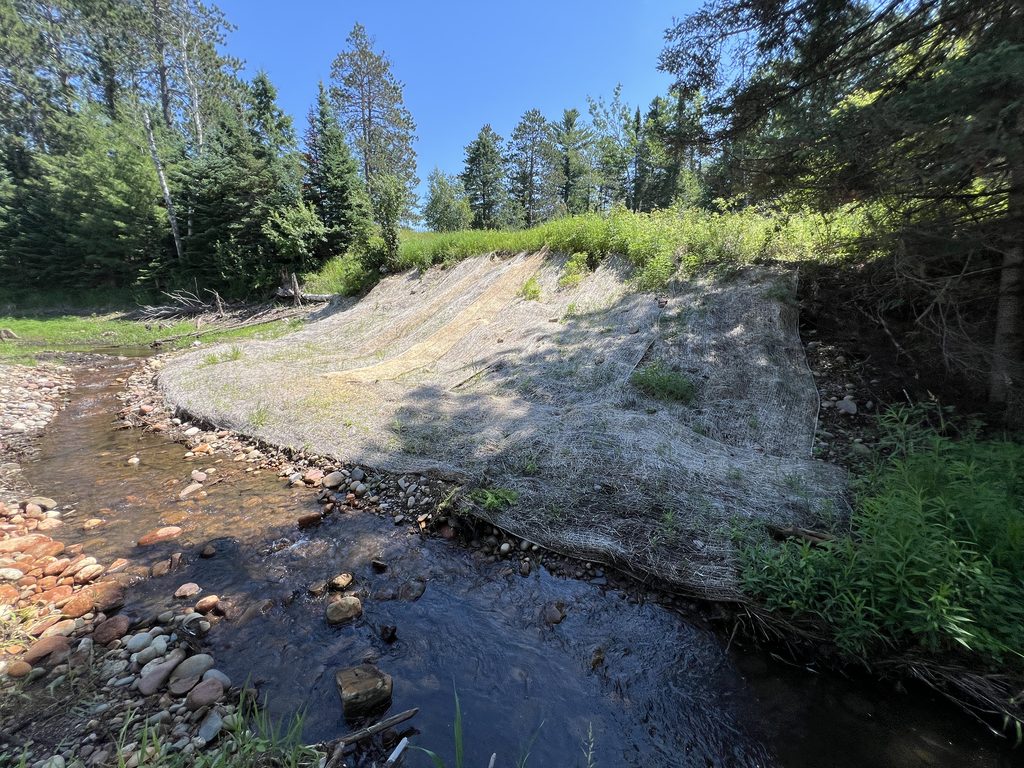
That same spirit of collaboration extended to the restoration work along the channel itself. Within the newly restored 360-foot channel reach, the team installed a native grass seed mix along with biodegradable erosion control blankets made of straw and coir along the banks.
These materials helped stabilize the soil and support vegetative establishment while the native plantings took root. Hand seeding and straw mulch were also applied across the exposed reservoir bottom and surrounding areas to prevent erosion during the critical establishment period.
Outcomes That Go Beyond the Creek
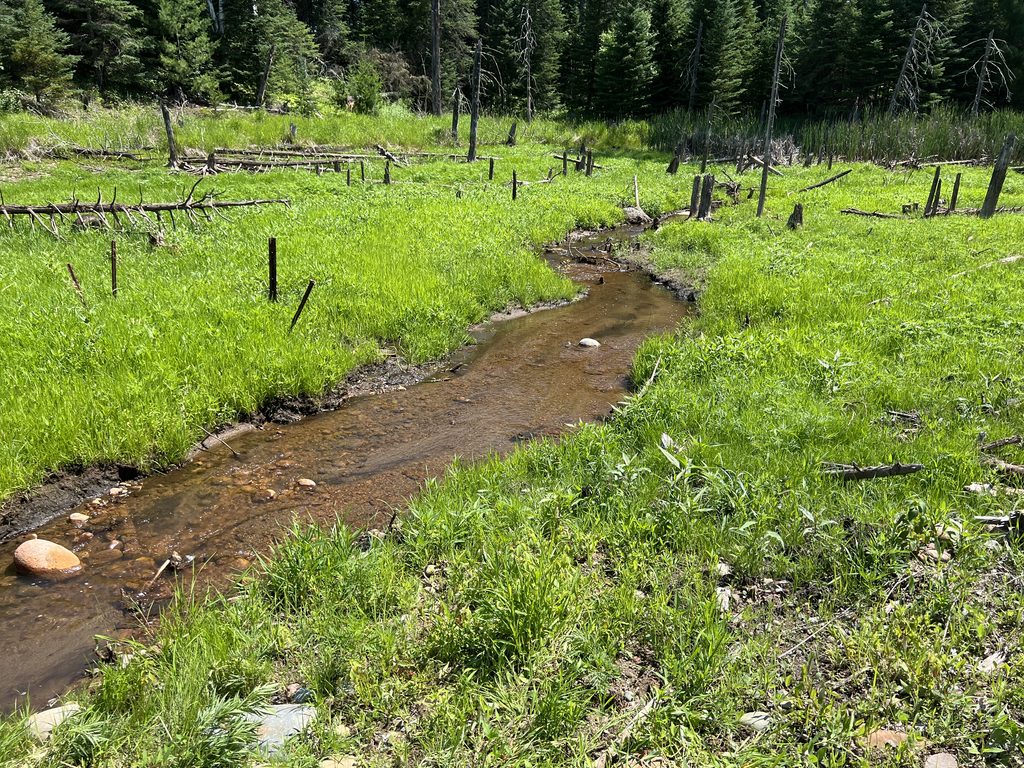
By the end of the project, the team had reconnected approximately 2,000 linear feet of Jolicouer Creek, restoring both channel form and floodplain function. Cold-water habitat and fish passage improved for brook trout, while long-term sediment migration and thermal stressors were reduced. Native riparian vegetation now supports the stream’s long-term stability.
For Kelsy, the project’s value showed up clearly in the details. “Our expectations were met for each goal of the project, and we were impressed with the level of detail in the long-term monitoring and adaptive management plan. This document gives us a blueprint to move forward with ensuring the project remains a successful restoration effort.”
A Partnership Built on Trust
Technical outcomes tell part of the story, but the working relationship behind a project like this matters just as much. Kelsy credited the MWI and GMR team for bringing both expertise and genuine understanding to the table:
“Lucius clearly understood the goals of the project, and as for our program’s perspective, we feel Lucius and Brice were wonderful to work with and brought a level of professionalism and expertise that greatly benefited the project. We appreciated the excellent level of communication, that the project was completed under budget, and the ease of adaptation to any issues. We will definitely recommend you to others and hope to work with you again in the future.”
Each partner played an essential role in bringing this decade-old vision to life. It couldn’t have happened without everyone’s expertise and local knowledge. By working together, we completed a project that will benefit the region for years to come.
Have a Stream Restoration Project in Mind?
Projects like Jolicouer Creek show what’s possible when strong partnerships and thoughtful design come together. If you’re working toward similar goals, planning to restore a cold-water habitat, improve connectivity, or address a long-standing watershed challenge, reach out to the Midwest Wetland Improvement team to start a conversation about what a restoration project could look like for your land or watershed.
Recent Comments