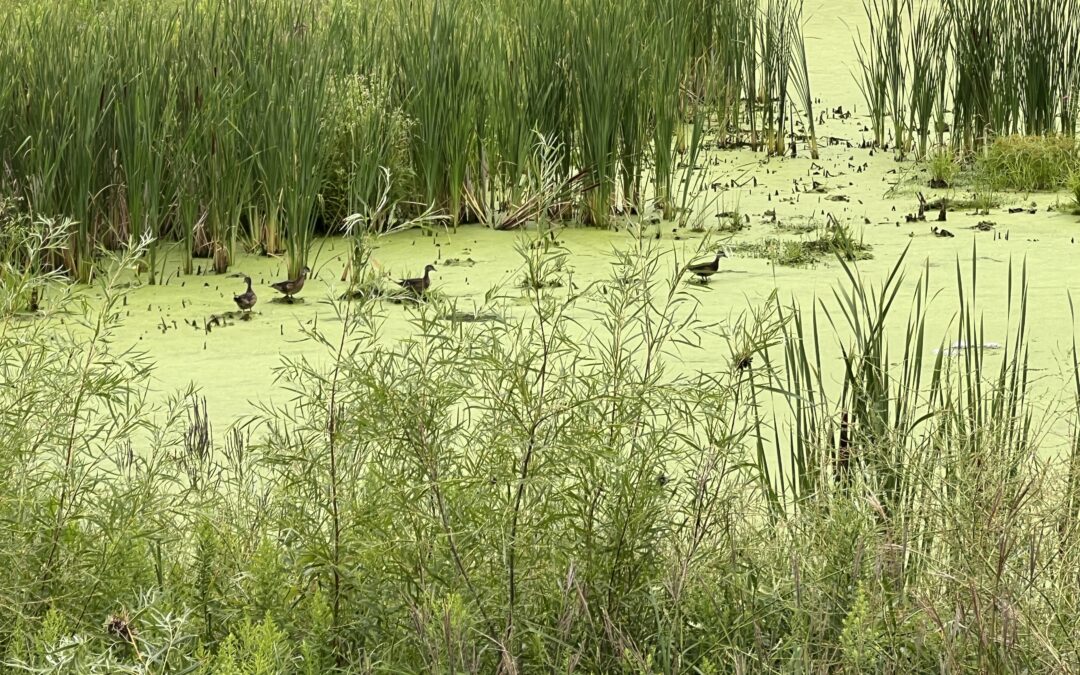
A conservation easement ensures it stays protected from development, drainage, and the land-use changes that have claimed so many wetlands across Minnesota. But while many wetlands in Minnesota are already protected under conservation easements, protection alone doesn’t guarantee a thriving ecosystem.
Many conserved wetlands are ecologically underperforming. They’re choked by invasive species and missing diverse vegetation.
This guide walks you through practical, easement-compliant strategies to improve your wetland’s ecological function and strengthen your land’s long-term health.
Why Enhancement Matters
Enhancement is about improving function within your existing wetland footprint, not expanding it, not altering the protected boundary, and not generating mitigation credits. You’re working within your easement’s constraints to get more ecological lift out of what’s already there.
Before starting any work, coordinate with your easement holder (such as BWSR, a land trust, or NRCS), your Local Government Unit (LGU) under the Minnesota Wetland Conservation Act, and your county Soil and Water Conservation District (SWCD). Handling these conversations early keeps your project compliant and on track.
Start With Vegetation: Your Highest-Impact Move
If you only focus on one thing, make it vegetation. Native plants are the foundation of a functioning wetland. They:
- Filter nutrients
- Stabilize soils
- Support pollinators
- Provide the habitat structure that wildlife depends on.
Many conserved wetlands are surrounded by agricultural fields or low-diversity turf, which creates many opportunities for improvement.
The most impactful steps are interseeding with diverse native wet meadow and shallow marsh species, like sedges, rushes, and native forbs, and establishing or expanding upland buffers of 50 to 150 feet around the wetland’s edge.
Buffers are often the single biggest opportunity for ecological lift on a conserved wetland, and they’re typically among the most straightforward enhancements to implement within easement restrictions.
Tackling Invasive Species: An Ongoing Commitment
Invasive species are one of the most common reasons conserved wetlands underperform, and managing them is never a one-time fix. In Minnesota, the biggest culprits are:
- Reed canary grass
- Hybrid cattail
- Purple loosestrife
Left unchecked, these species crowd out native vegetation and degrade the habitat structure your wetland depends on.
Effective management typically involves a combination of targeted herbicide application, prescribed burning or mowing, and follow-up native seeding to fill the gaps. The key word is follow-up. Invasive management requires consistent attention over multiple seasons to stick.
Habitat Add-Ons and What to Avoid
A few well-placed finishing touches can make a noticeable difference in wildlife use. Some low-cost, high-reward additions include:
- Wood duck boxes
- Pollinator plantings in upland buffers
- Amphibian refugia like logs and shallow zones
- Dense emergent vegetation for nesting
Converting adjacent turf or marginal cropland to native prairie and reducing mowing near wetland edges also helps connect your wetland to the broader landscape.
That said, some practices can put your easement compliance at risk. Avoid deep excavation or reshaping of the wetland basin, altering outlet elevations without approval, introducing non-native plant species, stocking fish in shallow wetlands, or installing hard armoring unless the relevant regulatory authorities explicitly approve it.
Funding & Technical Assistance: You Don’t Have to Do It Alone
The good news is that many of these enhancements are eligible for financial assistance. At the local level, your county SWCD offers cost-share programs for conservation practices. This is a great first call if you’re not sure where to start.
At the state level, the Minnesota Board of Water and Soil Resources (BWSR) offers a range of grant programs supporting wetland and soil conservation work.
Federally, the USDA Natural Resources Conservation Service (NRCS) administers several programs worth exploring, including the Environmental Quality Incentives Program (EQIP), Wetland Reserve Easements (WRE), and the Agricultural Conservation Easement Program (ACEP).
Reach out to any of these agencies early in your planning process. They can provide both technical guidance and funding support that makes your project more achievable.
A Wetland Worth Stewarding
You’ve already committed to protecting your land. With a little intentional effort, your conserved wetlands can keep filtering water, supporting wildlife, and building an ecological legacy that lasts well beyond your ownership.
At Midwest Wetland Improvements, we help Minnesota landowners do exactly that. Whether you’re just getting started or ready to build out a full enhancement plan, we’d love to talk through what’s possible on your land. Get in touch with our team today to discuss your plans.
Want expert wetland guidance delivered straight to your inbox? Subscribe to our newsletter for seasonal tips, restoration insights, and the latest in Minnesota wetland stewardship.
Recent Comments