If you’re planning grading, infrastructure, development, agricultural improvements, or habitat restoration in Minnesota, wetland delineation timing can directly impact your schedule, permitting pathway, and project costs. At Midwest Wetland Improvements, one of the most common questions we receive each spring is, “When can we start delineations?”
The answer is straightforward under Minnesota rules, but strategic planning makes all the difference. Let’s talk about when you can start your wetland delineations in Minnesota.
When Can Wetland Delineations Start?
According to the Board of Water and Soil Resources (BWSR), wetland delineations can begin once the growing season has started. But what does that actually mean? The official rule states that delineations can be conducted when at least two wetland plant species have germinated and grown tall enough for a trained expert to identify them in the field.
In simpler terms, this doesn’t mean waiting for the full spring thaw or for full leaf-out. It means waiting for enough snow to melt and enough warmth to arrive so that those first plants start popping up.
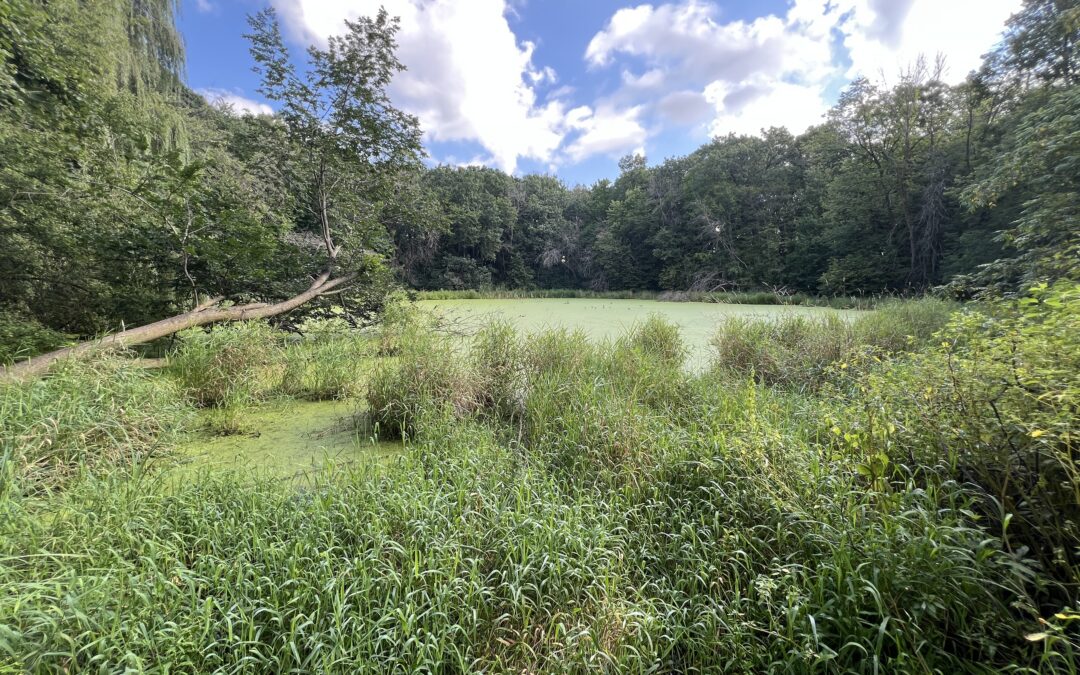
Think of it as the very beginning of spring, when you notice that first green growth appearing in wet areas. This is the start of the growing season, and that’s when wetland delineation work can officially begin.
One interesting thing to note is that this timeline runs from south to north across Minnesota. As warmer temperatures arrive in southern Minnesota first, the growing season starts earlier there. The “line” gradually moves northward as the thaw progresses. This means if your property is in southern Minnesota, you might be able to start your delineation earlier than someone with land up north. Because the growing season is weather-dependent, warm springs can accelerate timelines, while extended frost or snowpack can delay field work.
What About Channel Delineations?
Here’s where things get even more flexible. If your project involves delineating a channel, the rules are different. Channel delineation can actually be done year-round, even in the middle of winter. Why? Because channel delineations don’t depend on identifying living vegetation, as traditional wetland delineations do.
A channel delineation focuses on identifying the physical features of the stream or channel, such as bankfull indicators, Ordinary High Water Level (OHWL), channel morphology, bed and bank characteristics, and flow patterns. These features are present whether it’s January or July.
Of course, winter work comes with practical challenges. If there’s heavy snow cover, our team might need to shovel out the area to clearly see and measure the channel features. But the point is that you’re not locked into the same seasonal window.
This flexibility can be a huge advantage for developers and landowners who need to move forward with planning during the off-season. Whether you’re preparing for a construction project, applying for permits, or conducting environmental assessments, knowing that channel work can happen any time of year gives you more control over your timeline.
Planning Ahead for Your Wetland Delineation
The key to a smooth wetland delineation process is planning ahead. Even though the growing season rule is straightforward, weather can be unpredictable. An unusually cold or snowy spring can delay the start of the season, while a warm early spring might move it up. Reaching out to a qualified wetland professional early in the year helps you stay ready to move as soon as conditions are right.
- For farmers, this is especially important if you’re planning field work or considering converting wet areas into alternative revenue sources through wetland restoration or mitigation banking.
- For developers, early consultation means you can line up your permits and approvals without last-minute surprises.
- For landowners interested in restoration projects, understanding the timing helps you coordinate plantings, design work, and long-term management plans.
Working with experienced professionals like the team at Midwest Wetland Improvements ensures that your delineation is done correctly, on time, and in full compliance with BWSR and Army Corps of Engineers standards. We monitor conditions throughout the region and can let you know as soon as the growing season has officially started in your area.
Key Takeaways
- Wetland delineations in Minnesota can begin when at least two plant species have germinated and are identifiable, marking the start of the growing season.
- The growing season starts earlier in southern Minnesota and moves north as temperatures warm.
- Channel delineations can be done year-round because they don’t rely on vegetation.
- Winter channel work may require snow removal but offers schedule flexibility.
- Early planning and consultation with wetland professionals help you avoid project delays.
Ready to Move Forward?
Whether you’re waiting for spring or need a channel delineation done right away, Midwest Wetland Improvements is here to help. Our team of qualified wetland scientists serves landowners, developers, municipalities, watershed districts, and tribal communities across Minnesota, Wisconsin, South Dakota, and North Dakota. We’ll guide you through the wetland delineation process, help you understand the timing for your specific project, and ensure everything is completed to the highest standards.
Let’s position your project for regulatory clarity and long-term success. Contact us today at (952) 261-9990 or email info@midwestwetlands.com to get started!
Good article! I remember ground being moved (excavated when not knowing why it was being done). I understand better now, even though it was explained earlier. Thank you!