
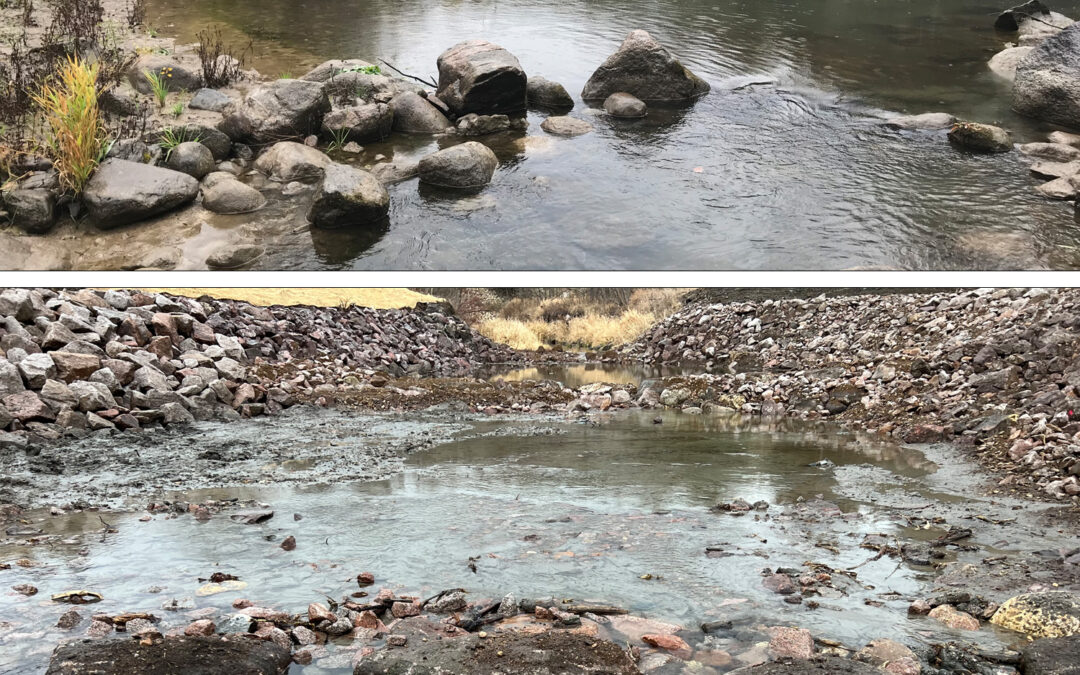
Did you know that dam removal is one of the most effective ways to restore natural river function, improve fish passage, eliminate safety hazards, and reduce long-term maintenance liabilities?
Across Minnesota and Wisconsin, hundreds of small dams, including mill dams, old farm impoundments, road crossings, and aging private dams, are reaching the end of their lifespan. Many are structurally failing, ecologically harmful, or simply no longer serving their original purpose.
For property owners, tribal communities, and local governments, removing a dam can unlock ecological, safety, and financial benefits. But dam removal is a complex, multi-year process involving hydrologic and hydraulic (H&H) modeling, floodplain analysis, sediment management, regulatory approvals, funding, construction, and long-term channel recovery.
This guide breaks down what a typical dam removal project entails and what you should expect if you’re considering one.
What Is Dam Removal?
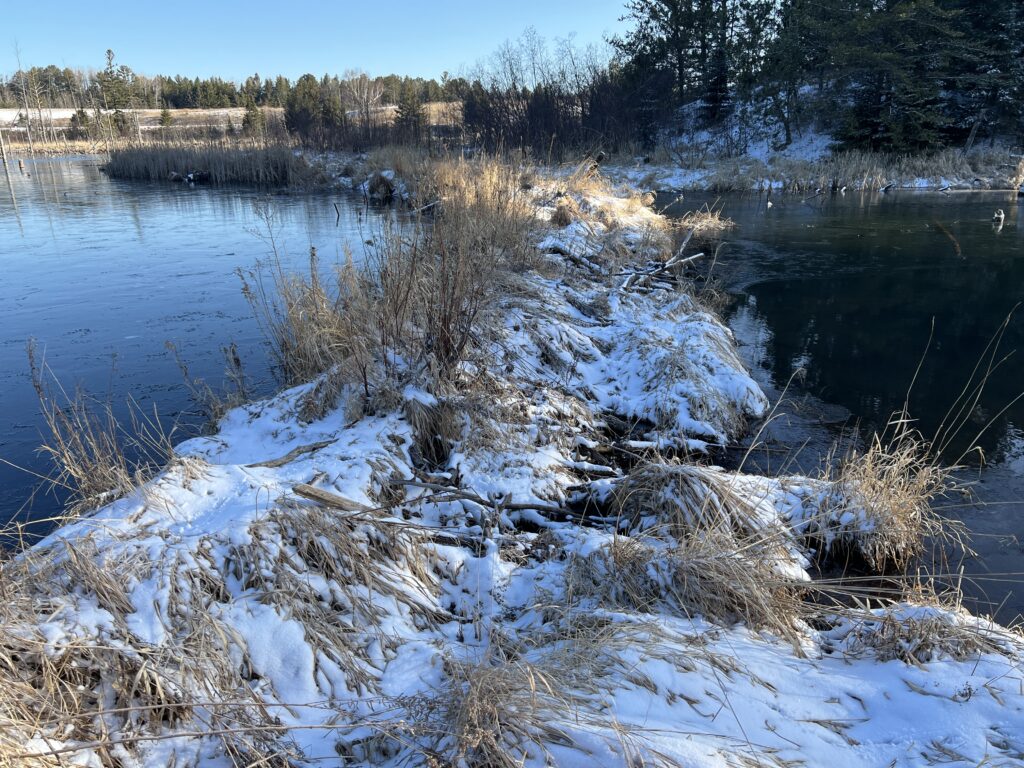
Dam removal is the full or partial deconstruction of a structure that impounds water, allowing the river or stream to return to a more natural, free-flowing condition. This process usually includes:
- Lowering or removing the spillway
- Breaching or excavating embankments
- Managing accumulated sediment in the upstream reservoir
- Restoring the upstream channel and floodplain
- Stabilizing the downstream channel
- Re-establishing riparian vegetation
- Addressing infrastructure or access changes (bridges, utilities, etc.)
Dam removals range from small, simple projects (old farm dams) to highly engineered restorations involving staged drawdown, sediment transport modeling, and full channel reconstruction.
Why Should Property Owners Consider Dam Removal?
There are many reasons why property owners may want to consider an old dam on their property. Here are just a few of the most common:
- Safety Liability: Aging dams can expose property owners and managers to legal and personal risk. Many no longer meet state safety standards, and failure can result in downstream flooding, erosion of adjacent properties, road washouts, and costly emergency rebuilds. Removing the dam eliminates those risks.
- Restoring Natural Ecology: Dams may be impeding the natural ecology of your property. Removing them could restore: fish passage, sediment transport, channel geomorphology, water temperature, dissolved oxygen levels, and wetland and floodplain connectivity. Reconnected rivers quickly re-establish habitat, often producing immediate improvements in fish and macroinvertebrate communities.
- Financial Benefits: Maintaining even a small private dam is expensive. Inspections, repairs, spillway work, and regulatory compliance add up. Many owners choose dam removal because it is often cheaper than repair, grant funding is widely available, and it eliminates long-term maintenance.
- Cultural, Recreational, or Aesthetic Reasons: Many property owners find that removing dams encourages safer recreation, and improved angling or canoeing access. It can also support the return of culturally significant riverine landscapes, as well as the return of more natural views and habitat diversity
Overview of Typical Project Scope
Every project and property presents different challenges, but typically, a full dam removal project combines:
- Hydrologic and hydraulic analysis
- Engineering design
- Reservoir sediment assessment
- Regulatory agency coordination
- Construction access and staging planning
- Permitting at local, state, and federal levels
- Post-removal restoration and stabilization
- Multi-year monitoring
Midwest Wetland Improvements typically describes the process as part engineering, part geomorphology, part habitat restoration, part regulatory navigation — all working together to ensure a safe, stable river recovery.
Project Goals: What Are You Trying to Achieve?
Before design begins, every project must define clear goals, such as:
- Full or partial dam removal?
- Desired stream condition post-removal (self-forming, fully reconstructed, step-pool, riffle-pool, etc.)
- Sediment management approach (natural redistribution vs. excavation)
- Floodplain reconnection targets
- Invasive species and erosion control priorities
- Public access or recreation improvements
- Cultural, Tribal, or historical considerations
- Infrastructure needs (bridges, roads, utilities)
- Stabilization goals (how much grading, how much vegetation)
When you articulate goals early, there’s a better chance that your project will be successful during all phases, including feasibility, design, and permitting. It can also help guide the financial aspect and keep your project on budget.
Establishing a Project Timeline
Dam removal projects typically take 2 to 4+ years from concept to completion, depending on permitting, design complexity, sediment volume, and funding.
1. Initial Assessment (1 to 3 months): During this phase, you can expect:
- Site visit and structure assessment
- Reservoir sediment depth sampling
- Hydrology and watershed review
- Safety risk and infrastructure evaluation
- Rough Order of Magnitude (ROM) cost estimating and feasibility snapshot
2. Feasibility Study (3 to 9 months): The feasibility study is the most important early phase and includes steps such as:
- Engineering analysis of removal scenarios
- Sediment transport modeling
- Concept‐level design
- Preliminary regulatory coordination
- Construction cost modeling
- Alternatives evaluation
- Stakeholder and landowner meetings
3. Chasing Grant Funding (Varies: 6 to 18+ months): These types of projects are expensive and many rely heavily on outside funding. Common grant funding for Minnesota and Wisconsin dam removal projects include:
- MnDNR Dam Safety Grants
- WisDNR Municipal Dam Grants
- USFWS Fish Passage grants
- NOAA habitat restoration grants
- Tribal natural resources programs
- Watershed district or county cost-share
4. Final Design (6 to 12 months): As the project progresses into the final design phase, your project team will prepare full engineering plans, sediment management plan, erosion control design, channel restoration details, and contractor-ready construction documents.
During this phase, you’ll typically see:
- 30%, 60%, 90%, and final plan sets
- Multiple rounds of agency review
- Public/tribal engagement
- Cost refinement
5. Construction (1 to 2 seasons): The construction process typically includes:
- Staged drawdown
- Breaching/removal of spillway or embankment
- Sediment management (excavate, stabilize, or redistribute)
- Channel shaping or reconstruction
- Installation of riffles, pools, and floodplain benches
- Revegetation and erosion control
6. Maintenance (1 to 3 years): Maintenance is critical for early stability. During this phase of the project, you can expect:
- Vegetation establishment
- Invasive species management
- Grade control checks
- Bank stabilization repairs (if needed)
7. Monitoring (2 to 5+ years): Monitoring depends on the permitting and funding source but often includes:
- Channel cross sections
- Photo points
- Vegetation success
- Sediment movement
- Rapids/riffle performance
- Fish passage evaluations
Permitting Requirements
Dam removals require multiple permits, with timelines that can heavily influence the schedule. The process must align with the design, sediment plan, and regulatory expectations. Agencies may request additional modeling, sediment testing, or alternatives analysis — all of which can extend the timeline.
Let’s take a closer look at how permitting requirements can impact the timeline.
U.S. Army Corps of Engineers (9 to 18 months)
The U.S. Army Corps of Engineers (USACE) regulates:
- Clean Water Act Section 404
- Potential 401 Certification coordination
- Nationwide or Individual Permit processing
- Tribal coordination
- ESA (endangered species) considerations
Their review cycles can require revisions or additional modeling.
Federal Emergency Management Agency (FEMA) Floodplain & NFIP Review (6 to 18 months)
If the dam is located within a mapped floodplain, removing it may trigger review under the National Flood Insurance Program (NFIP) and FEMA floodplain regulations. This step is often overlooked early on, yet it can significantly impact design, modeling, and project timelines.
FEMA’s primary concern is ensuring that dam removal does not increase flood risk to upstream or downstream properties and that floodplain functions are appropriately maintained or improved.
Typical FEMA-related requirements may include:
- Floodplain impact analysis
Hydraulic modeling (existing vs. proposed conditions) to evaluate changes in:
- Base Flood Elevations (BFEs)
- Floodway limits
- Water surface profiles for the 1% (100-year) and, in some cases, 0.2% (500-year) events
- Base Flood Elevations (BFEs)
- Conditional Letter of Map Revision (CLOMR)
Required if the project will:
- Increase BFEs
- Modify floodway boundaries
- Alter mapped floodplain features prior to construction
- Increase BFEs
- Letter of Map Revision (LOMR)
Submitted after construction to officially update FEMA Flood Insurance Rate Maps (FIRMs) to reflect:
- Removed dam
- New channel geometry
- Restored floodplain elevations
- Removed dam
- Local Floodplain Administrator coordination
FEMA review typically flows through the local community participating in the NFIP, requiring:
- Floodplain development permits
- Public notice (in some cases)
- Certification that the project meets local floodplain ordinances
- Floodplain development permits
- No-Rise or Compensatory Storage evaluations
Especially important where floodways are present or where local ordinances are more restrictive than FEMA minimums.
FEMA coordination often runs parallel to DNR and USACE permitting, but it can become a critical path item if not addressed early. Additional modeling, revisions, or public coordination can add months to the schedule.
In many cases, dam removal can reduce long-term flood risk by eliminating backwater effects and restoring floodplain connectivity, but this benefit must be clearly demonstrated through defensible hydraulic analysis.
Department of Natural Resources Permit (6 to 9 months)
In both Minnesota and Wisconsin, Department of Natural Resources (DNR) review is substantial and may include:
- Public Waters Work Permit
- Water Level/Dam safety review
- Hydrology/hydraulics evaluation
- Sediment and fish passage considerations
- Cultural/historical review
Local County/Watershed Permits (30 to 60 days)
Your local county and watershed permit process are typically the quickest and include things like:
- Floodplain or shoreland reviews
- Local erosion control permits
- Watershed district approvals
- Road authority notifications
- County land disturbance permits
Cost Considerations
The cost of a dam removal is highly site-dependent. Small farm dam removals may be straightforward, while larger dams with deep sediment require significant analysis and earthwork. All of this will impact the cost of your project.
Typical Cost Range (High-Level Estimate)
While talking to a professional is the best way to know for sure how much your unique project will cost, here are some high-level estimates:
- Small private dams: $75,000 to $250,000
- Mid-sized municipal/tribal dams: $250,000 to $1,000,000
- Large engineered removals: $1 to $5+ million
Factors That Influence Pricing
There are many factors that will influence the pricing of your project. Some of the most common factors include:
- Sediment volume (biggest driver)
- Need for sediment removal vs. natural redistribution
- Channel reconstruction complexity
- Access and staging constraints
- Removal of concrete vs. earthen embankments
- Utility, bridge, or road considerations
- Long-term stabilization requirements
- Floodplain grading volume
- Depth and duration of drawdown
Funding Opportunities
Many dam removals are grant-driven, and Midwest Wetland Improvements can assist in identifying and securing these funds for your project. Common funding avenues that we often explore include:
- State Dam Safety Grants (MN & WI)
- Tribal habitat restoration grants
- NOAA Community-Based Habitat Restoration Program
- USFWS Fish Passage funds
- Great Lakes Restoration Initiative (GLRI)
- Watershed district cost-share
- Local conservation organizations
What to Expect: Key Realities of Dam Removal
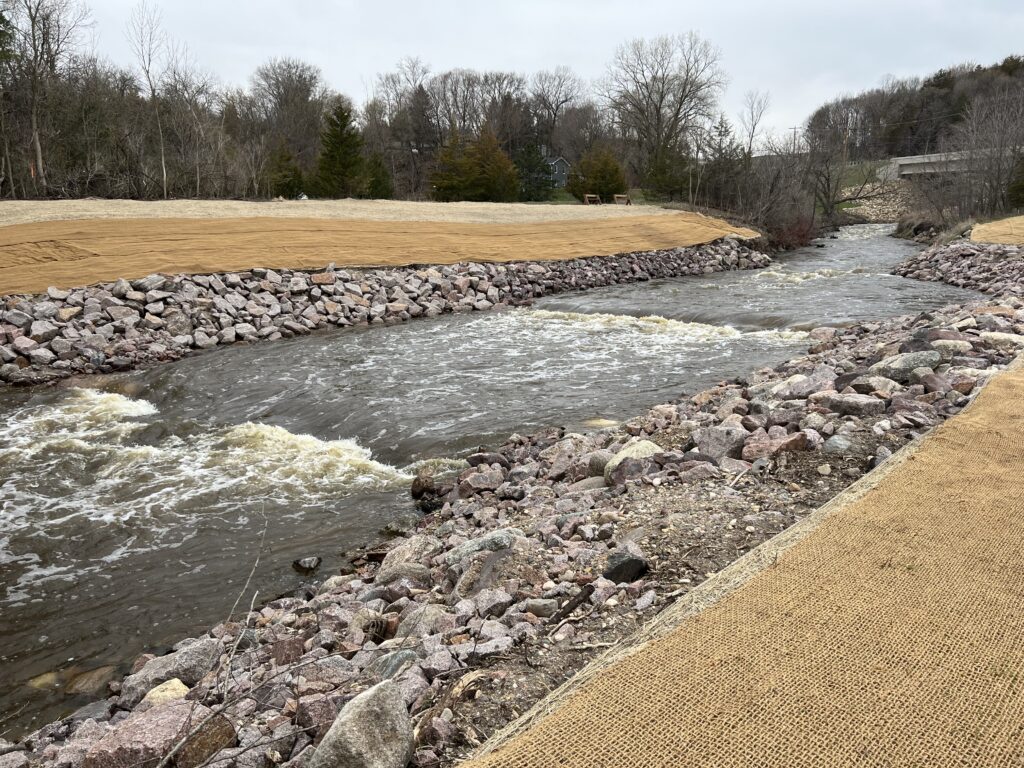
Dam removals can be transformational, but they come with practical considerations. Owners, communities, and Tribes should be prepared for:
- Changing Water Levels: Reservoirs will lower, sometimes dramatically. This exposes sediment and changes shoreline vegetation, especially early on.
- Sediment Movement: Expect turbidity, sediment redistribution, or the need for excavation. Monitoring is part of the process.
- Vegetation Recovery Takes Time: Native vegetation establishes over 2 to 5 years, with invasive management essential in early years.
- Natural Channel Evolution: Even with engineered riffles or pools, streams adjust post-removal. Some bank slumping or channel migration is normal.
- Public Interest: Dam removal can quickly draw attention. Anglers, neighbors, historians, and local officials often want to be involved.
- Time Before Full Stabilization: Most projects stabilize within 1 to 3 years, but ecological recovery continues over a decade.
- Major Long-Term Benefits: Despite the early adjustments, dam removal typically leads to more resilient rivers, improved fish passage, restored sediment transport, reduced flood risk, lower long-term cost, safer recreation, and an ecological uplift across the watershed.
Discuss Your Dam Removal Project with Midwest Wetland Improvements
Are you ready to remove a dam on your property? The first step is to consult an expert, such as Midwest Wetland Improvements.
Our team has extensive experience working with property owners, Tribes, and local governments on dam removal projects of all sizes. Our goal is to always do the right thing – both for our clients and for the environment.
Are you ready to discuss your environmental project ideas? Schedule a call with us today!
Recent Comments