Mitigation banking is becoming an increasingly attractive option for landowners, Tribal communities, and conservation-minded organizations across Minnesota and Wisconsin.
There are many good opportunities to restore wetlands and streams and to generate long-term benefits from selling mitigation credits within the St. Paul District of the U.S. Army Corps of Engineers (USACE). However, the mitigation banking process is not simple. It often takes several years and requires careful planning, a clear understanding of costs, permitting requirements, and long-term responsibilities.
This guide walks through what a typical wetland mitigation bank project looks like and what you can expect if you’re considering one for your property.
What Is a Mitigation Bank?
A mitigation bank is a restored, enhanced, or preserved wetland or stream system that generates compensatory mitigation credits. These credits are sold to public and private clients who need to offset unavoidable aquatic resource impacts under Section 404 of the Clean Water Act or state-level wetland regulations, such as the Minnesota WCA or Wisconsin NR 103.
In simple terms: You restore the land → You create ecological uplift → You sell credits → You protect the property long-term.
Why Property Owners Consider Mitigation Banking
Landowners pursue mitigation banking for several reasons:
- Ecological Restoration & Stewardship: Many landowners have degraded wetlands, drained farmland, incised ditches, or hydrologically altered and straightened streams that could be brought back to life. Mitigation banking provides a potential long-term investment to restore ecological integrity and receive financial reward.
- Long-Term Revenue: Credits can sell for significant value, depending on the watershed, market demand, and resource type. Many mitigation banks provide sustained revenue over 5–15 years as credits are released and sold in phases.
- Legacy and Conservation: Mitigation banks require permanent conservation easements over the restored area, ensuring long-term protection of the restored ecosystem.
Overview of a Typical Project Scope
A mitigation bank is not just “restoring a stream or a wetland.” It is a full-scale ecological, regulatory, engineering, construction, and long-term monitoring project that includes:
- Ecological assessments
- Hydrologic modeling
- Conceptual and final design
- Interagency Review Team (IRT) coordination and approvals
- Construction and earthwork
- Vegetation establishment and invasive species management
- Long-term monitoring (5–10 years)
- Adaptive management
- Easement establishment and long-term stewardship planning
In other words, it’s a complex blend of design-build restoration, regulatory navigation, and ecological management.
Project Goals: What Are You Trying to Achieve?
Every mitigation bank must clearly define its ecological and economic goals from the start:
- Wetland type(s) to restore (e.g., shallow marsh, sedge meadow, floodplain forest)
- Stream objectives (e.g., channel stability, floodplain reconnection, corridor revegetation)
- Hydrology restoration targets (ditch fills, tile breaks, water control structures)
- Credit type(s) (wetland area credits, stream credits, preservation credits)
- Desired return on investment
- Long-term stewardship vision
Having precise goals helps determine feasibility, project size, cost, marketability, and the likelihood of U.S. Army Corps of Engineers and Minnesota Board of Water and Soil Resources’ approval.
Project Timeline
Mitigation banking is a multi-year process. Timelines vary based on permitting, design complexity, landowner readiness, and funding availability. A typical project includes:
- Initial Assessment (1–3 months): This phase includes a site walk through, drainage/tile assessment, market evaluation, and a desktop hydrology and soils review. At the end of the initial assessment, we can make a recommendation on whether the site is a strong candidate
- Feasibility Study & Project Prospectus (6 to 9 months): This phase contains a detailed hydrologic and topographic analysis, the creation of a concept-level design, credit potential modeling, and a rough order of magnitude (ROM) cost estimate. We also engage in preliminary discussions with regulatory agencies and submit the first round of documentation for their review..
- Final Design & Permitting (6–12 months): We move into the Final Design phase by completing the Mitigation Banking Instrument (MBI), engineering design, construction plans, and agency coordination. This stage involves multiple IRT reviews and revisions.
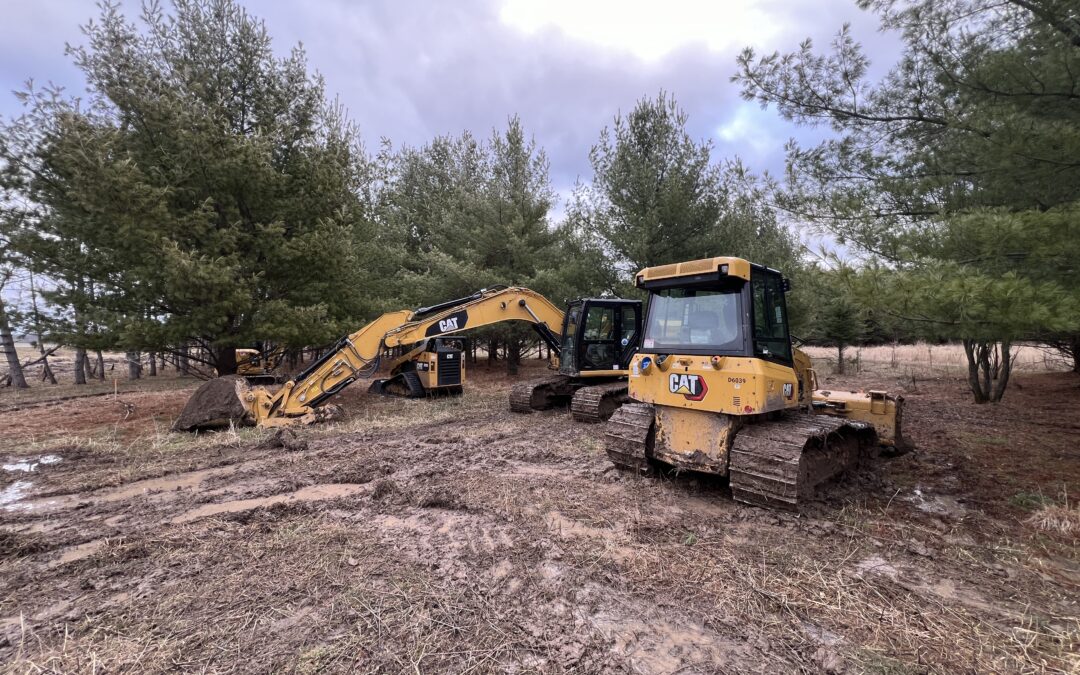
- Construction (1–2 seasons): Construction often occurs in phases that include ditch plugs or fills, tile breaks, stream realignment/grade control, excavation or fill, planting and seeding, and water control installation. This phase is heavily impacted by weather conditions, contractor availability, and site cropping and wetness.
- Maintenance (Ongoing for 3–10 years): Early-year maintenance is critical. This is where we invest in invasive species control, replanting/reseeding, structure adjustments, and access management.
- Monitoring (5–10+ years): Monitoring requirements are set in the MBI and include hydrology gauges, vegetation plots, photo points, stream cross-sections, and annual reporting. Credit releases depend on meeting performance standards.
How Permits Impact the Timeline
The St. Paul District is one of the most active mitigation banking regions in the country and permitting timelines reflect this complexity. Since all permits must align with the Mitigation Banking Instrument (MBI), delays in agency review cycles, public notice requirements, or IRT comments can extend timelines.
Minnesota DNR Permit (6–9 months)
This often includes:
- Public Waters Work Permit
- Water Appropriation
- Protected waters review
- Fisheries/hydrology coordination
Army Corps of Engineers (9–18 months)
The USACE manages:
- The IRT
- 404 permitting
- Approval of the MBI
The USACE process often takes a significant amount of time, as it includes multiple rounds of review, revisions, field visits, and public notice.
Local County SWCD/Watershed Permits (30–60 days)
Typical local permits include:
- Grading/earthwork
- Stormwater
- Wetland Conservation Act (WCA) approvals (in MN)
- Erosion control
While the local review is usually the fastest portion, it is critical that it aligns with state and federal requirements.
Cost Considerations
Costs vary widely by site, hydrology, earthwork volume, and ecological goals.
Some factors that influence pricing include:
- Depth of excavation/fill required
- Extent of tile removal
- Access limitations (steep slopes, soft soils, wetlands)
- Stream realignment complexity
- Amount of excavation required for floodplain reconnectivity
- Planting strategy and species mix
- Monitoring requirements
- Market demand for credits
- Competing mitigation banks also selling credits in the area
- Size of the project (economies of scale)
Wetland bank construction in MN/WI often fall roughly in the range of $5,000–$15,000+ per acre restored, monitored, and maintained, depending on site conditions and credit type. With wetland restoration, there is an economy of scale that can be achieved that reduces the cost per acre as the size of the proposed project increases.
Stream mitigation construction is typically much more expensive at $140–$500 per linear foot, depending on restoration intensity. There is less opportunity for economy of scale on stream restoration projects. The longer and more complicated the construction, the more they cost.
What to Expect: Additional Project Realities
Mitigation banking is rewarding, but it is not simple. Before starting your project, make sure you’re prepared for these project realities:
- Multi-Year Commitment: From feasibility through final credit sale, banks often span 10–20+ years.
- Agency Involvement: The IRT is collaborative but meticulous. High-quality data, ecological justification, and clear design intent are essential.
- Upfront Investment Before Revenue: Credit sales begin only after the bank is approved, constructed, and the initial set of credits are released.
- Permanent Legal Restrictions: Conservation easements are required in perpetuity,; land uses are permanently and forever changed.
- High Standards for Performance: Vegetation must meet diversity and dominance standards; hydrology must match targets; streams must show stability and function.
- A Highly Specialized, Niche Market: Finding buyers, understanding service areas, and navigating credit release schedules all require experience.
Midwest Wetland Improvements: Your Mitigation Bank Project Experts
Have you been considering a mitigation bank project, but are concerned about navigating the complexities of a project of this size? The team at Midwest Wetland Improvements has extensive experience with mitigation bank projects of all sizes.
When you work with us, you can rest assured that your project will be completed to the highest level of standards, generating sellable credits on an open market and providing habitat and environmental benefits for generations to come.
Are you ready to explore your options? Contact us today!
Recent Comments